

Antonio Reynoso is not a bad politician. A former city councilmember turned Brooklyn Borough president, Reynoso is a progressive with broad appeal, a rare politician that hipsters, Hasidic Jews, and Latina aunties could all get behind. So it was no surprise that Reynoso stepped into the race to succeed Congressmember Nydia Velasquez.
But his skills didn’t matter. His coalition blew apart. One term assemblymember and Democratic Socialist Claire Valdez crushed him.
This has been a story repeated over and over again across the country. In Michigan, Mallory McMorrow, a progressive who made a genuinely brave stand for trans rights in the state legislature, nevertheless found her campaign for Senate floundering, unable to gain ground against former Wayne Public Health head Abdul El-Sayed. In Colorado, Democratic Socialist Melat Kiros beat longtime progressive Diana Degette.
So what’s happening? Why are progressives finding themselves outflanked by candidates to their left And why is this phenomenon happening everywhere?
The answer is Palestine.
It’s hard to remember, but in the immediate days after October 7th, public opinion was with the Israelis. But as the days turned into months and a genocide unfolded, American perceptions changed dramatically, with Israel and America’s unpopular war on Iran sealing Israel’s fate as a public pariah. Half of all US voters describe Israel’s actions as a genocide as do a whopping of 77% of all Democrats.
In the opening days of Israel’s genocidal campaign in Gaza, some of the only politicians who dared criticize Israel and openly call for a ceasefire were democratic socialists and they suffered for it. The Democratic Socialists of America was widely condemned by politicians across the aisle, including progressives like then-NYC Comptroller Brad Lander. 2024 was a brutal year for democratic socialists; both Cori Bush and Jamaal Bowman lost their reelection bids under a torrent of AIPAC spending. For progressives triangulating on Palestine—decrying Israel’s atrocities while refraining from outright calling the genocide a genocide—was a way for them to satisfy their progressive base while not attracting the ire of AIPAC.
But their triangulation has become a disastrous liability. We live in horrific times and horrific times call for moral clarity. Perhaps Claire Valdez’s most devastating line of attack on Antonio Reynoso was that he had not called the genocide in Gaza a genocide until he decided to run for congress. By trying to please both sides, triangulating progressives became genocide deniers.
Palestine does not rank among Americans’ top issues, but that does not mean it is not electorally salient. Candidates who have been against a genocide from day one demonstrate that they have a backbone and moral clarity, telling voters more than their policy positions ever could. With our politics permeated with cynicism, it is the goal of a candidate to make voters believe that they will at least try to do what they say they will do. A candidate who is willing to call a genocide a genocide, often to their own detriment, at the very least genuinely holds their opinions. In other words: Palestine is a signal to voters that a candidate is legit.
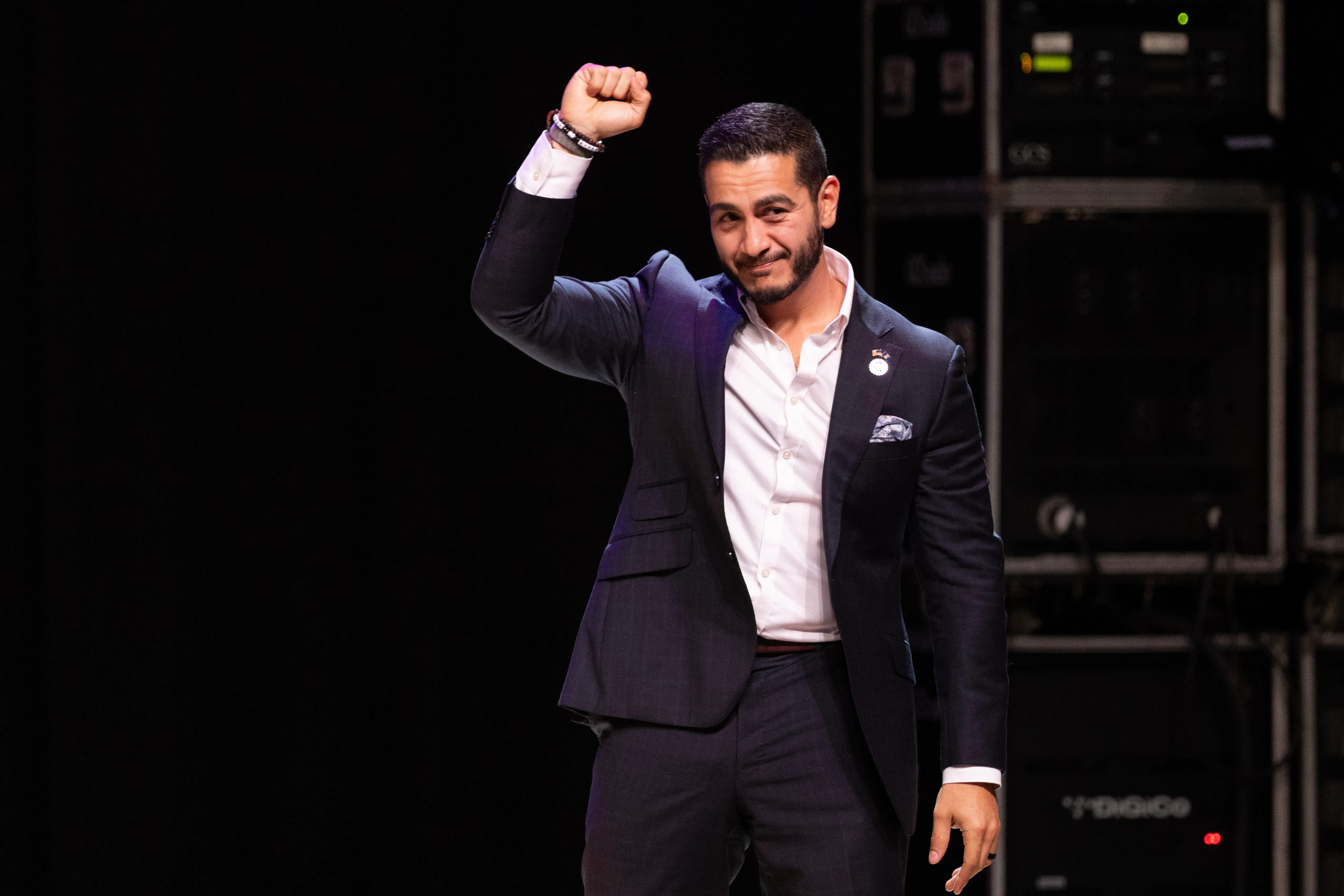
What about centrist voters and candidates? After McMorrow dropped out, El-Sayed was widely expected to win his primary handily against moderate, hyper pro-Israel Congressperson Haley Stevens, but instead only eked out a narrow victory. Centrist and Zionist pundits quickly pointed to his smaller than expected victory as a clear example that Palestine was not a litmus test for more centrist voters. Michelle Goldberg argued that El-Sayed should take the closer than expected results as a reason to moderate Palestine.
But this argument ignores several key factors in Michigan. First of all Stevens outspent El-Sayed 9-to-1 largely thanks to AIPAC money and had the endorsement of Gretchen Whitmer, Michigan’s popular governor. El-Sayed also made Stevens’ support for Israel and her AIPAC backing a major campaign issue. The fact that she lost despite her advantages says a lot about the Michigan Democratic electorate. Palestine was a major issue in this race and no doubt contributed to El-Sayyed’s victory. To deny it is to stick one’s head in the sand. This doesn’t mean that being all anti-Zionists will automatically win all primaries, but that pro-Palestinian solidarity has gone from a liability to a strength.
This might be frustrating for politicians who saw public opinion rapidly swing from pro-Israel to anti. “I was just following what people believed,” they might say. But that’s how leadership works! Our leaders should be better than us. They shouldn’t chase public opinion on a genocide.
Where Palestine was a fringe issue that was sure to attract the indignation of powerful forces, it has now become the defining issue of our time. The longer a candidate has been willing to call what is happening in Gaza a genocide, the more credibility they have in elections.
Calling a genocide a genocide is not a piece of triangulation. It is a moral stand. Voters understand this. Will politicians?